
On Friday 15th September, the Department of History hosted students from the Blessed Hugh Faringdon Catholic School, for our Asian and Middle Eastern History Day School. Students were treated to a diverse set of talks from academics in our department, and had some dynamic, interesting discussions about who is remembered in history, who is left out, and why.
***
To kick us off, Amy Longmuir, a PhD student in the department, led an engaging starter discussion with pupils thinking about what history is, why we study it, and who is remembered in history. We challenged our visitors to think about Asian and Middle Eastern history, research that focuses on a vast area, and discuss the key events that they remembered from their current knowledge. The students and Amy had a great time making a mind-map of their thoughts, and got warmed up for the following sessions.
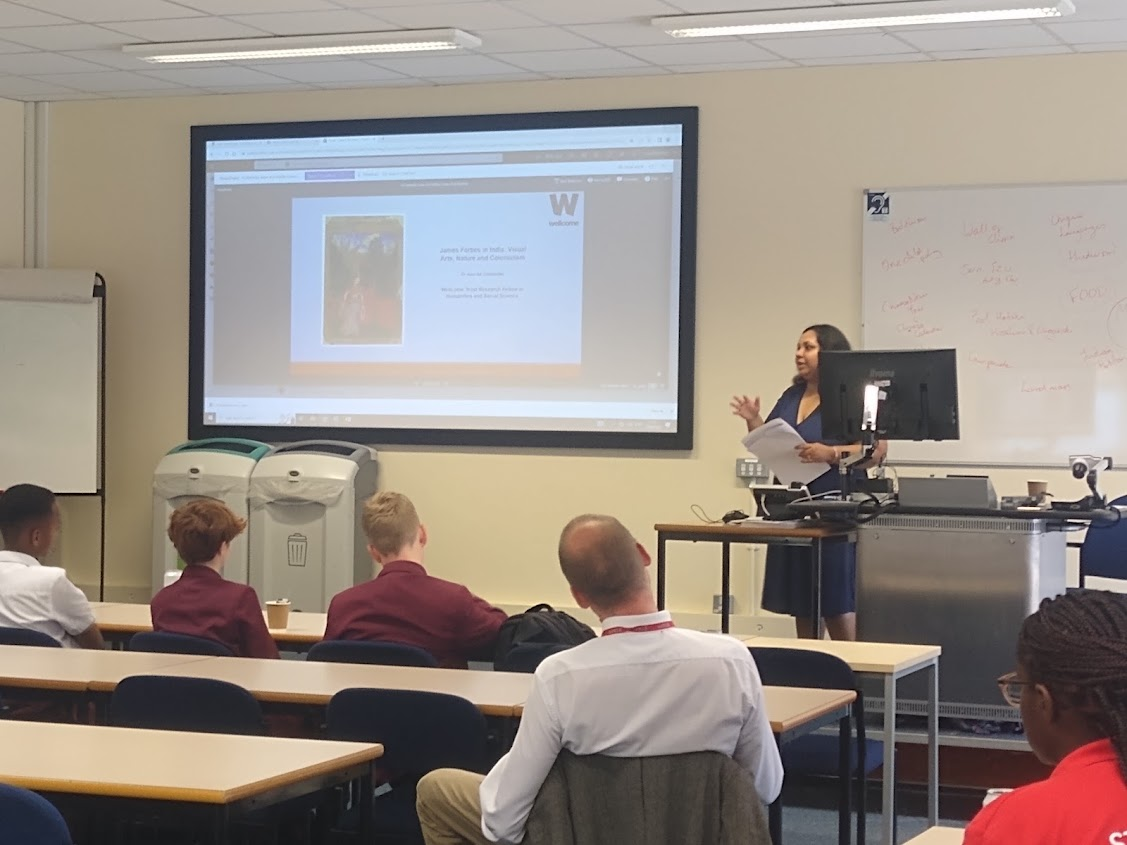
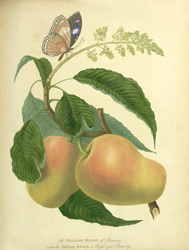
Our first academic session was led by Dr Apurba Chatterjee, who presented a short talk on James Forbes’ time in India. Students viewed a variety of illustrations by Forbes, and Apurba challenged them to think about whether the mangoes (photo below) were illustrated in a British or Indian style, leading to a candid conversation regarding colonialism, the East India Company and the British Raj.
Upon asking our visitors what their favourite part of Apurba’s talk was, much emphasis was placed on Tippoo’s Tiger, an instrument that is currently held in the collections of the Victoria and Albert Museum in London. Apurba described the sound of the instrument as being likened to someone screaming! That definitely caught all of our attention, and prompted further questions about what is certainly a unique instrument.
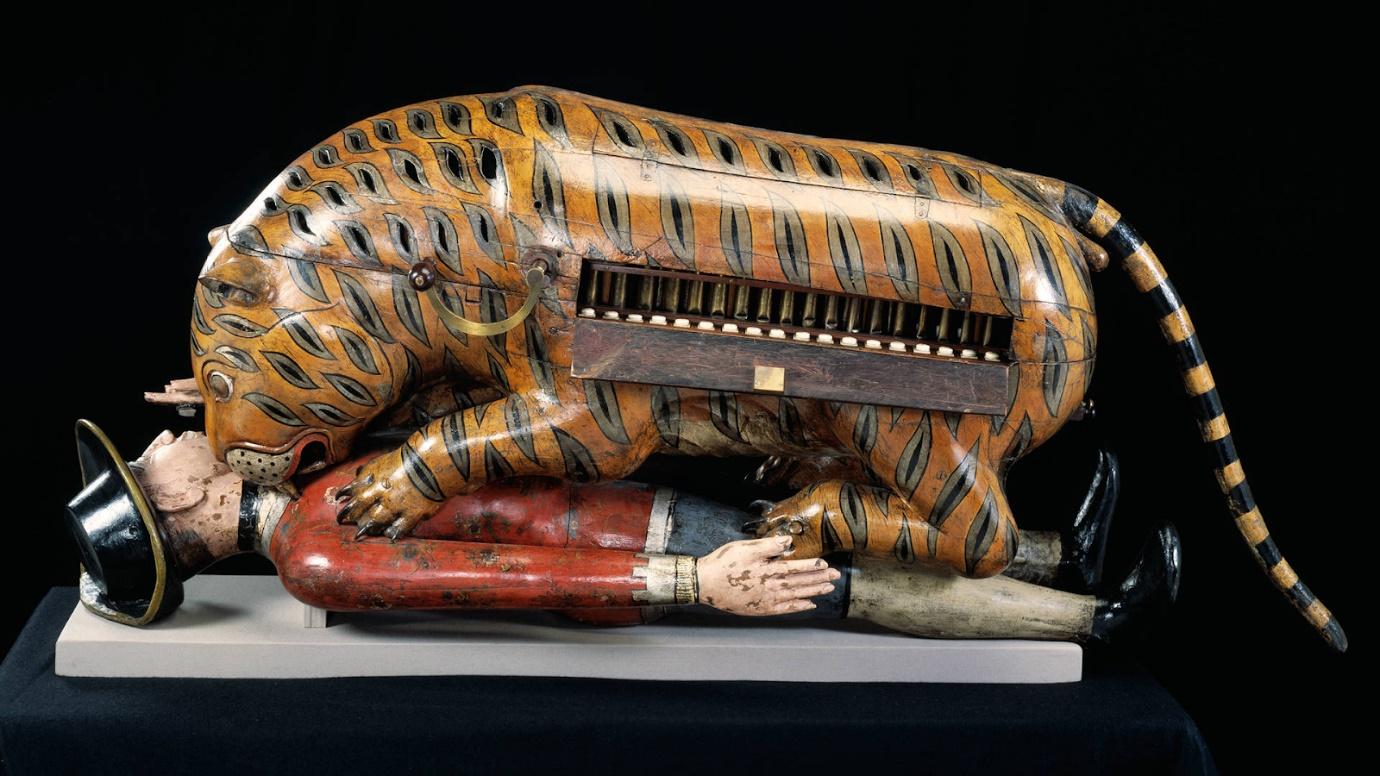
You can find out more about Tippoo’s Tiger here: https://www.vam.ac.uk/articles/tipus-tiger
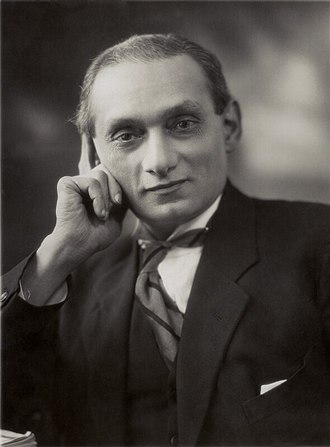
We then moved on to a talk from Dr Dan Renshaw, who brought us back to Britain with a discussion of Shapurji Saklatvala, activism and the Indian Workers Association. Students were treated to a talk focusing on communism, fascism and activism by Asian revolutionaries in pre-war Britain.

Students said that they were interested in the life and career of Saklavata, the first elected MP with Indian Parsi heritage. They discussed, with Dan, the significance of his commitment to the Labour Party and the Communist Party of Great Britain, which led to a wider discussion of what Communism was in early twentieth century Britain.
After lunch in the sunshine, we were joined by Dr Natalie Thomlinson, who focused her talk on Asian migration in Britain. Students learned about migration to Britain from the Indian Subcontinent, and whereabouts migrants chose to settle in the UK. Students were taught about the racism encountered by migrants, and how that was reflected in the legislation that impacted those choosing to settle in Britain. Our visitors were also taught about the Grunwick strike and the treatment of female migrant workers that triggered the protest, led by Jayaben Desai.
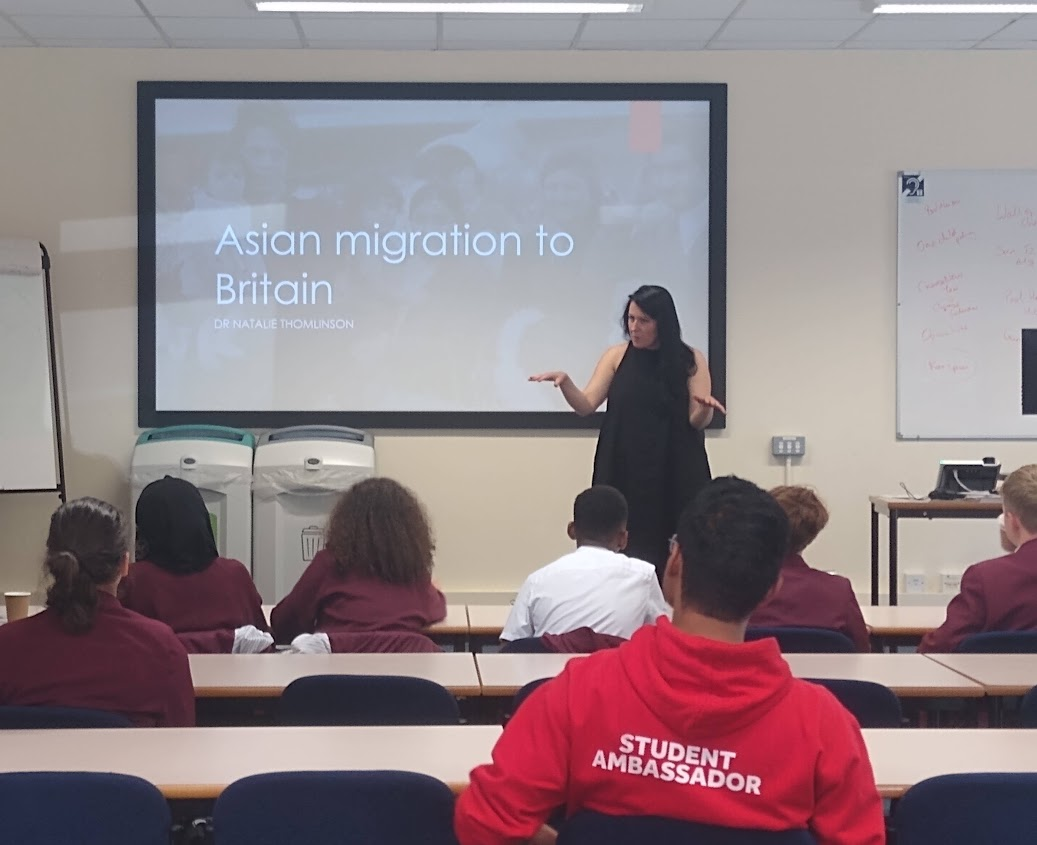
When asked about the most poignant elements of Natalie’s talk, students commented on the emotional toll that institutionalised racism takes, which sparked further discussion on gender and equality. Students were able to see the human side of migration through Natalie’s presentation, and think more carefully about why people choose to start a new journey in another country.
***
Finally, our students were treated to a campus tour, where they got to see campus in all its glory during a busy moving-in weekend for new starters at the university.
Dr Renshaw commented about Friday’s event that:
“It was wonderful to be joined today by pupils and teachers from Blessed Hugh Faringdon school for the first Asian and Middle Eastern history day school at the University of Reading. Over the morning and afternoon we discussed visual culture, the natural world and imperialism in eighteenth-century India, the involvement of people of South Asian heritage in the British suffragette movement and the post-First World War Left, and migration to Britain from South Asia and East Africa from the 1940s to the 1970s. It was great to hear the views and opinions of the students discussing these historical questions and wider ideas on inclusion/exclusion from historical narratives. Thanks to everyone who took part in today’s event, and we hope to do more day schools involving local schools in the near future.”
A big thank you to our speakers, who shared some really interesting insights into elements of history that our visitors might not have had the opportunity to think about in depth before. We also wanted to extend our gratitude to Blessed Hugh Faringdon Catholic School for their attendance, engagement and fascinating questions.
This was just the first of many days that our department wishes to hold for schools that are interested in engaging with history at the University of Reading. If your school thinks that something like this would be beneficial for your students, we’d be all too happy to discuss this with you.
To get in touch, please contact Dr Renshaw at d.g.renshaw@reading.ac.uk
Abbie Tibbott is a PhD History Student and Social Media Assistant at the University of Reading.
All comments and opinions presented in this article are that of the author.
We have made every effort to abide by UK copyright law but in the instance of any mislabelling of images, please contact the author of the blog post.

 READING HISTORY
Leave a comment