
On a decidedly wet day on Tuesday 14th November, part 3 students enrolled on the module ‘Battleaxes to Benchwarmers: the first female MPs’, made the trip to our university’s Special Collections, held at the London Road campus. Having taken this module myself in 2018, I remain a highly biased supporter of its content (being related to my own PhD research) but also of module convenor, Dr Jacqui Turner’s, commitment to teaching beyond the classroom. This, alongside her work on one of our placement modules: Discovering Archives and Collections, has modelled to myself, her PhD student, the importance of opening archives and heritage organisations, getting students through the door, and ensuring that learners have access to alternative working environments throughout the course of their programme.
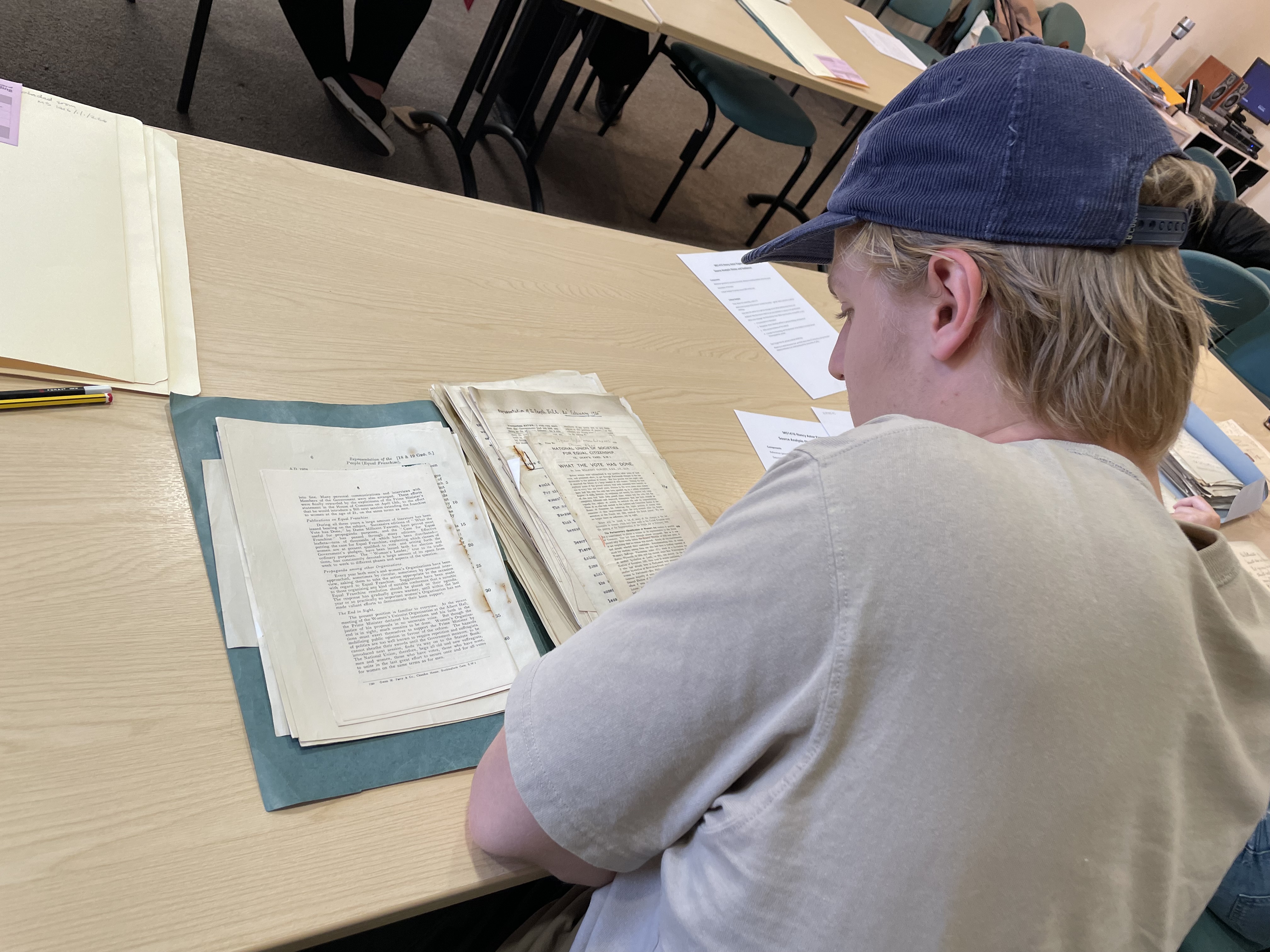

Jacqui takes students in their first year of their studies into the archive, and I remember fondly attending a handling session in 2016, where we looked at letters written by evacuees. Since then, I have been lucky enough to accompany Jacqui to her archive sessions, and even provide some of my own teaching to her lovely students. As I completed my application to become an Associate Fellow owith Advance HE this past summer, I reflected on the need to expose history students to the ‘practical’ side of researching and thought more consciously about how these experiences can impact student wellbeing.
The part 3 students on this visit worked on the Astor Papers, handling, reading and evaluating the contents of these sources in a quiet, safe environment with great assistance from the Adam Lines, Collections Academic Liaison Officer and Widening Participation Projects Officer at Special Collections. Students weren’t thrown in at the deep end, but neither were they patronised or treated as lesser than those more experienced within these spaces. Teaching such as this pays real dividends to the students themselves, who not only procured specialist knowledge to put into their coursework assessments, but also gained access to collections they might otherwise not have known existed.
These sessions held at Special Collections are held with the university curriculum in mind, making them intrinsically linked to the aims and values of higher education. Feedback from students at the session highlighted how much they valued the experience, with some planning to return to the archive to find more primary materials for their dissertations, with all reporting having acquired new skills to support their research development during the session.

I am one of those students who never had access to a real ‘academic’ library at school. The books had been removed and replaced with a computer suite, with limited hard copies of anything. University was my first experience of real research, as sources collected for my A-Level History coursework consisted of scanned book chapters provided by my very helpful history teacher, who was constrained by resources available himself. Being welcomed into these academic spaces showed me that I had a place among them. Imposter syndrome is real, and I am by no means beyond its reach, but it was these small, taster experiences during my undergraduate degree at Reading that helped me to see my position amongst the staff here.
In terms of wellbeing, student mental health remains a priority, and value for money of degrees is an ever-growing concern. Students continue to ask themselves, am I really getting what I am paying for? Learning beyond the classroom in alternative environments places students within potential workplaces and introduces them to the possibility of working within the heritage sector. Without exposure, students are in the dark, and in an era where a degree is increasingly seen as ‘not enough’, these spaces help students to gain work experience for their CV that is actually related to their degree.
At Reading, we are lucky within the Department of History to partner with some fantastic institutions who admit students for placement-based learning and provide volunteering opportunities. Having connections to these places has taken years of staff time and considerable planning of how to make these opportunities work for students, and that is not something that should be underestimated. Personally, it was these first encounters with the archive that motivated me to continue to study history, as these seminars made me feel welcomed and included within an environment that was completely new to me. Although my AFHEA application had an overarching theme of what history teaching can do better for widening participation students, I sought to champion the value of teaching within the archive, both for academic development, student confidence and resilience. These attributes, I believe, are crucial for students being able to research independently by the end of their time at Reading.
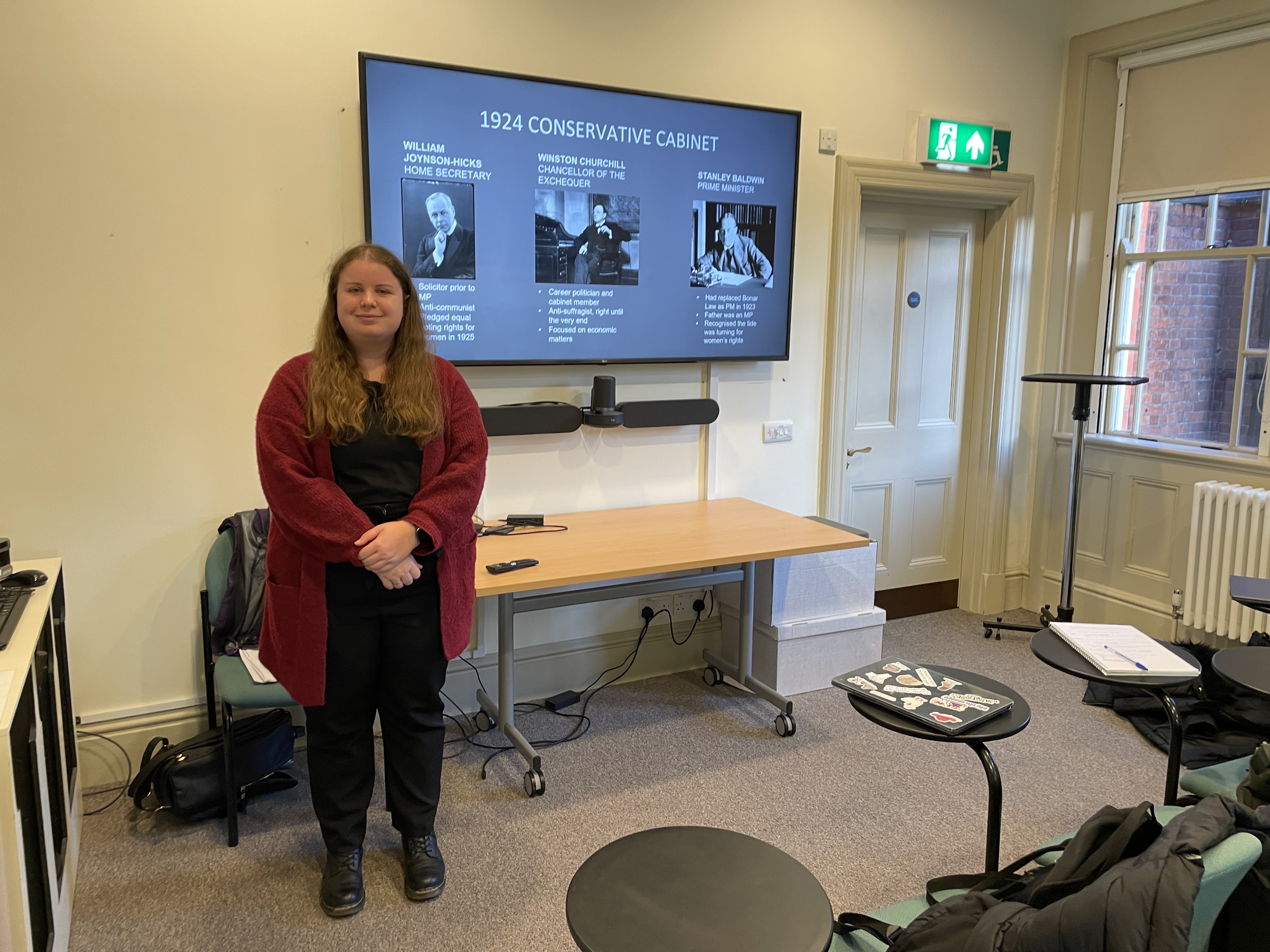
We’d love to hear from our students, both undergraduate and postgraduate, about your experiences within the archive. We would welcome a blog post or even a small snippet and photo to post on our Instagram page. Sharing your love of learning beyond the classroom may inspire someone else to take the plunge!
Get in touch: a.f.tibbott@pgr.reading.ac.uk
To find out more about Special Collections: https://collections.reading.ac.uk/special-collections/collection-overview/
Abbie Tibbott is a PhD History Student at the University of Reading.
All comments and opinions presented in this article are that of the author.
We have made every effort to abide by UK copyright law but in the instance of any mislabelling of images, please contact the author of the blog post

 READING HISTORY
You must be logged in to post a comment.