
The Stenton Lecture is an annual lecture by an eminent historian, hosted by the Deparment of History, named in honour of our founders, Sir Frank and Lady Doris Stenton. Here, two of our PhD students, Stephen Evans and Caroline Johnson, reflect on the 2024 lecture and symposium.
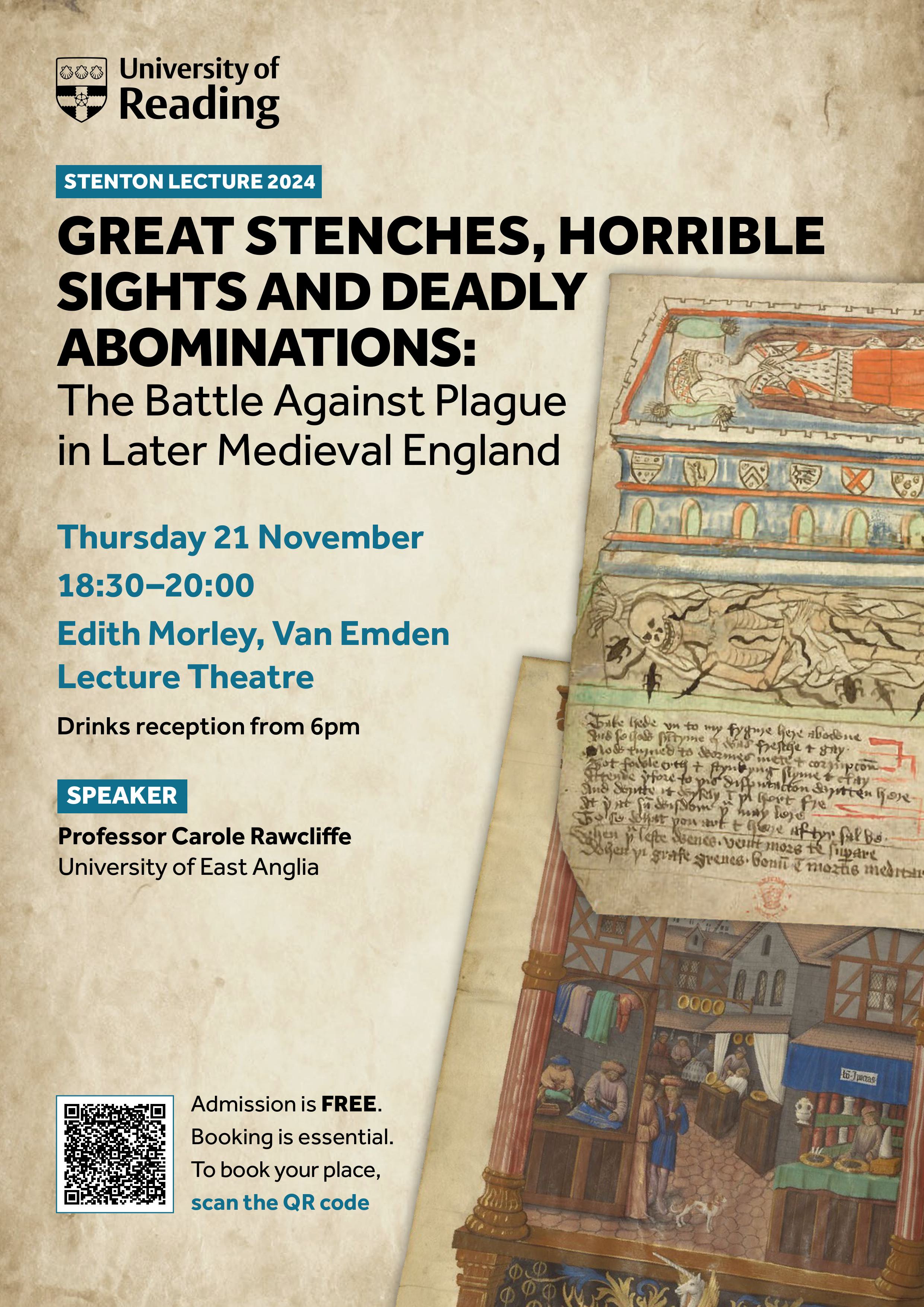
In her Stenton Lecture, Professor Carole Rawcliffe set about correcting many of the stories that have emerged about the plague in the medieval period, firstly pointing out that it was not one isolated epidemic as many people think but a wave of infections that kept recurring from 1348 onwards. Professor Rawcliffe then presented her case that, contrary to the stereotypical view of a laissez faire acceptance of towns being dirty and unsanitary environments, English town leaders of the late medieval period were not only interested in public health but also took action to try and keep their towns sanitary.
Urban authorities did not passively accept calamities such as the Black Death as being an act of God or affected by the alignment of the heavens. They accepted that action needed to be taken for the common good and these actions were based on the medieval belief system informed by the Graeco-Roman physician Galen’s theory of bad air or miasma as the explanation for contagion.
Anything that carried an unsightly stench or corrupted the atmosphere had to be carried out away from where people lived and worked. Activities such as butchering carcasses had to be undertaken outside the walls of the community. Waste had to be carried out of the town in covered waggons, often at night. Local statutes were introduced to prohibit the fouling of waterways or anything that resulted in the putrefaction and infection of the air, causing intolerable disease.
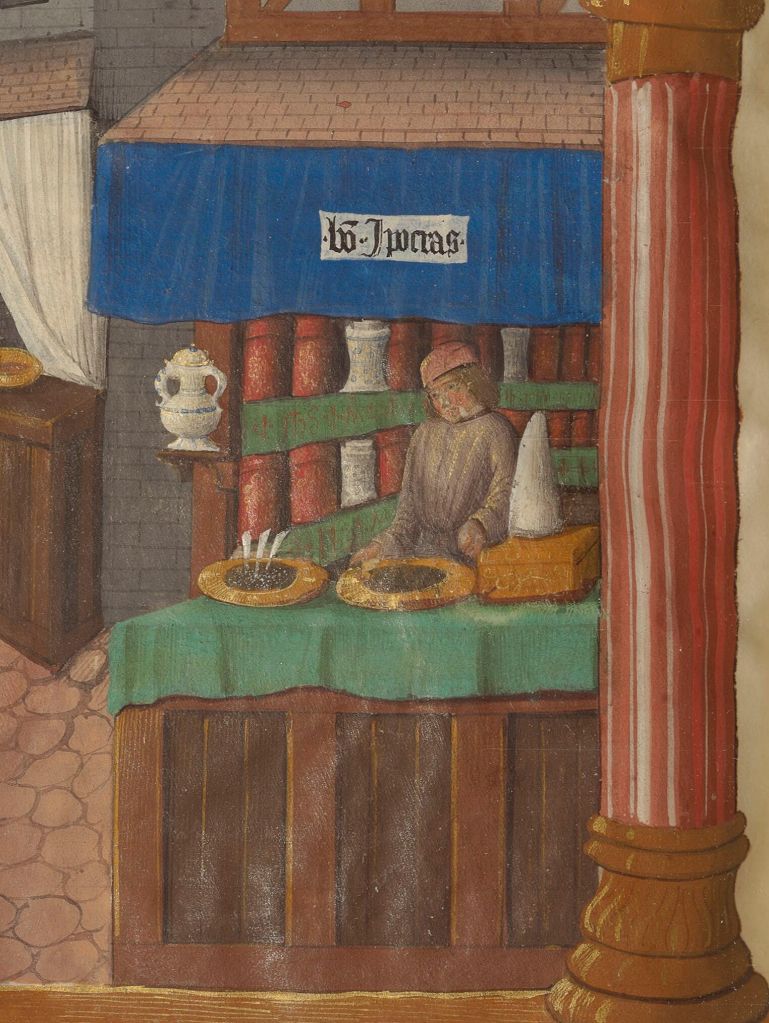
Professor Rawcliffe brought the talk alive with stories such as butchers caught selling putrefied meat sitting in the stocks in the town square with the stench of their meat being burnt around them.
The audience had a wide range of questions which covered everything from masked plague doctors to surviving being shut up in a house with plague, and the questions would have continued if time had not run out.
Before the main Stenton lecture, a well-attended symposium was held in the afternoon with seven presentations on the subject of the senses in Medieval to Early Modern medicine. Despite the wide range of topics covered under this banner, the talks demonstrated the many connections that could be made in people’s thoughts on health throughout the period. Perhaps most surprising of all was how some of the cures advocated, such as getting out into nature to help depression, are now being embraced by modern health practitioners as if they are new discoveries. We have more to learn from the medieval period than we may think!

 READING HISTORY
You must be logged in to post a comment.