The past few months have been busy for both staff and PhD students in the department. This summer, we played host to students who visited campus to take part in various activities.
On June 10th, the department hosted Andover College and aimed to give students a better understanding of what it could be like to study history at university. PhD student Amy Longmuir led a session entitled, ‘Personal is Political: The British Women’s Liberation Movement c. 1968-1992’, which allowed students to explore the explosion of feminist activism and theorising that occurred in Britain and the Western World.


Amy reflected on the outcome of her session:
“By giving the students the opportunity to explore the demands of the Women’s Liberation Movement through the primary sources, I encouraged the students to think not only about what the movement demanded, but why they did so and in what order, both for importance and chronology. The students worked really well on this and drew out a number of examples of how this has influenced the position of feminism and women in Britain today, noting both the continued struggles and amazing successes of those who identify as women today. The session went incredibly well and the students were very engaged, linking the topics they had already learnt in their studies to the activities, and thinking broader about the changing position of women and gender across the late-twentieth century. Hopefully a few more budding historians have been inspired!“
Our ‘Unlocking History’ event for KS3 pupils returned for a triumphant second year in June, with more local students participating in workshops and activities. Students were treated to an introduction by Dr Dan Renshaw and then were divided into groups that rotated around several themed classes. Dr Mara Oliva has been kind enough to give us an insight into her session:

“I had the absolute joy of leading two lively and inspiring sessions on sustainability for a group of high school students—an experience that left me more hopeful than ever about our planet’s future. We kicked things off with something truly special: a 3D reconstruction of the iconic “Blue Marble” image, accompanied by the original audio of astronauts describing Earth from space. The students were captivated—eyes wide, completely silent—as they took in the stunning beauty and fragility of our shared home.
From there, we journeyed through the history of Earth Day, tracing how it grew from a grassroots movement in 1970 to a global campaign for environmental action. Energized by this, the students got creative. Each was asked to design their own Earth Day poster or message—and their responses were incredible. One student even performed an original rap about climate change, earning a roaring round of applause!“
Other sessions focused on archival sources, the roaring twenties, the British Women’s Liberation Movement, migration and childhood. All of our visitors were able to sample something they had never encountered before! Another particular success was an item handling session led by Dr Jacqui Turner, with pupils brainstorming about what was within their personal archive.
“We began by thinking about what was in our own personal childhood archive and who were the custodians of it.


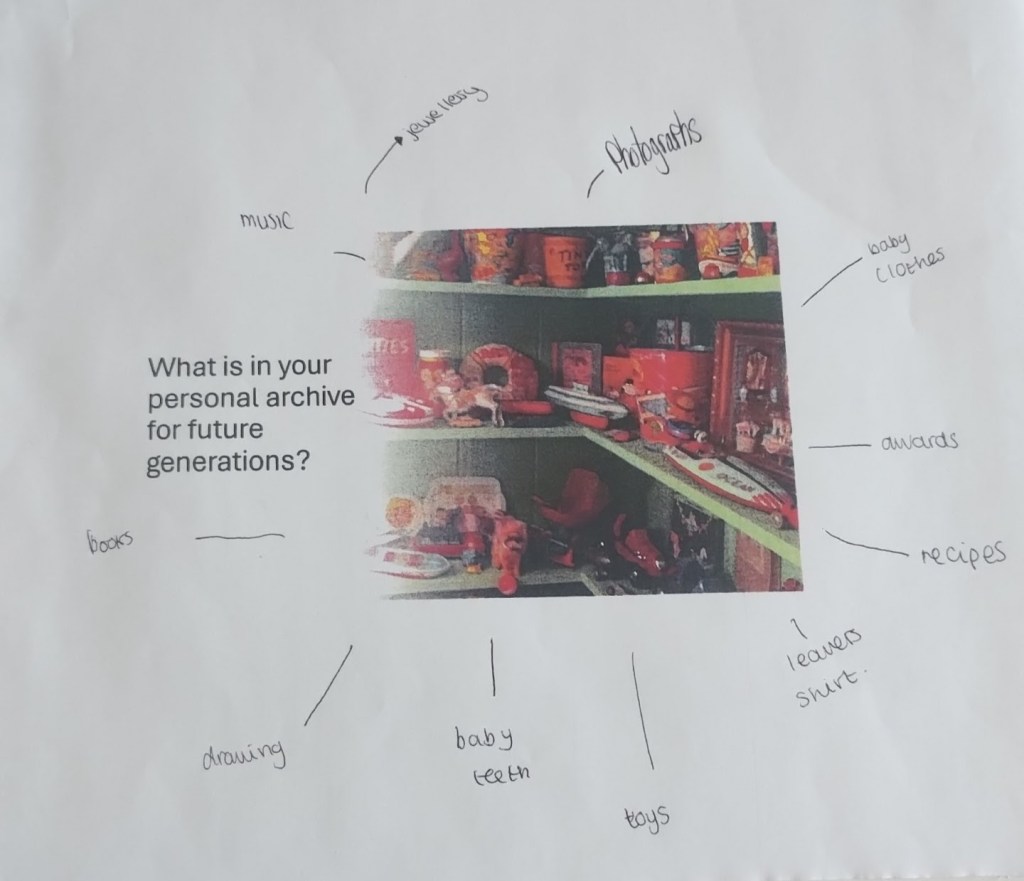


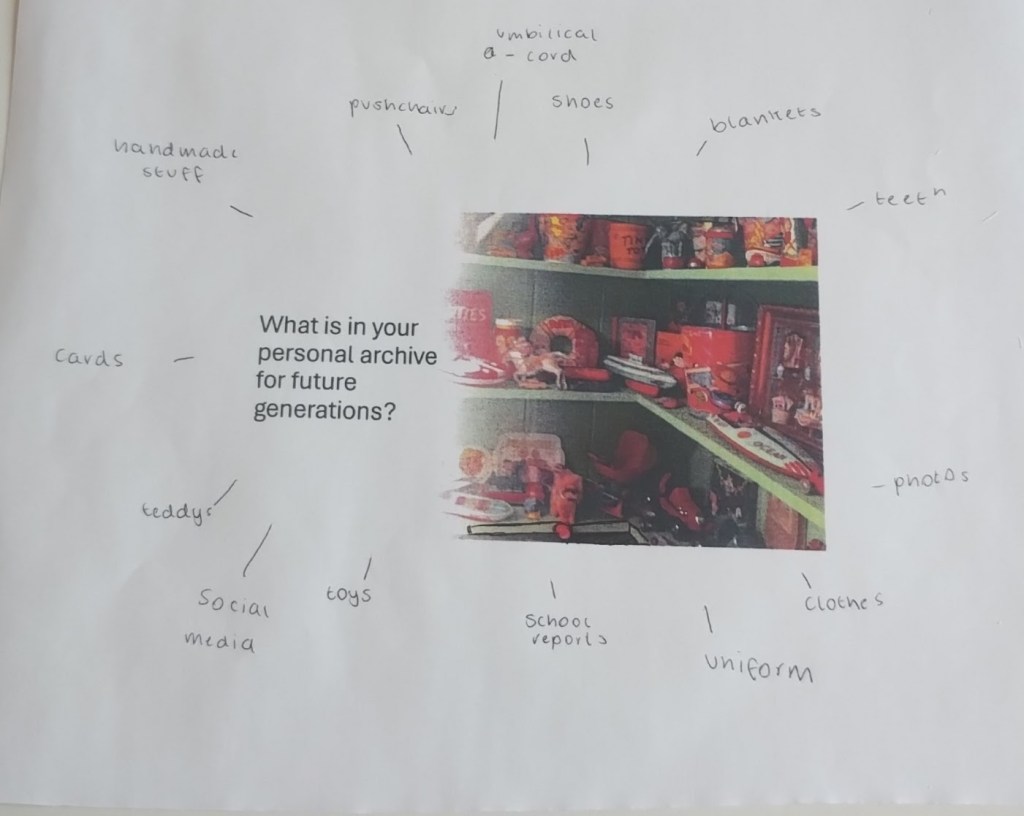
We soon worked out that the material left by children more than 100 years ago was very similar to our own – schoolwork, toys, certificates of achievement and much more. We then handled historical evidence, or primary material, children left behind more than 100 years ago and considered why we might have to think differently about it, what it told us about the different expectations of girls and boys in the past and how (and why) this slowly changed. This included Girls Own and Boys Own Papers between 1870 to 1920; a teenage girl’s diaries describing her experience of evacuation in 1939 – 1940 and Louis John Halsby’s drawing books from 1898 from Rochelle Street/Nichol Street Board School, London which is still there!

Students could not quite believe the age of the material they were allowed to handle and what it told us about children’s lives in the past. Specifically, we thought about what these objects told us about education, leisure or about how girls and boys were going to behave and what was expected of them. They very quickly got to grips with what they told us about gender expectations and how they changed, especially from the end of the Nineteenth Century though the first half of the Twentieth Century.“

As this was the second year of the event, new timetable adjustments led to even smoother transitions and plenty of time for students to explore the Edith Morley building (with an expert guide) on such a hot day.
During the first week of July, the university hosted students from our ‘Reading Scholars’ programme, who come to stay on campus and take part in subject-specific activities. For the history strand this year, participants were tasked with creating a presentation on the ‘key event in human history’, which was quite a task! To help them identify and justify their key event, several staff members gave lectures on their specialisms.
Dr Rachel Foxley reflected on her session:
“I ran a session on ‘News, politics and radicalism in the English Revolution’. We talked about how the world of print and publishing changed as the political crisis of the 1640s blew up, and how some contemporaries were horrified by the multitude of pamphlets which now shaped public debate. The students then read a radical text by the Leveller leader John Lilburne about the original equality of all men and women. The students asked great questions about gender, race, and politics and really got into the potential implications of the extract – I really enjoyed discussing one of my favourite texts with them.”
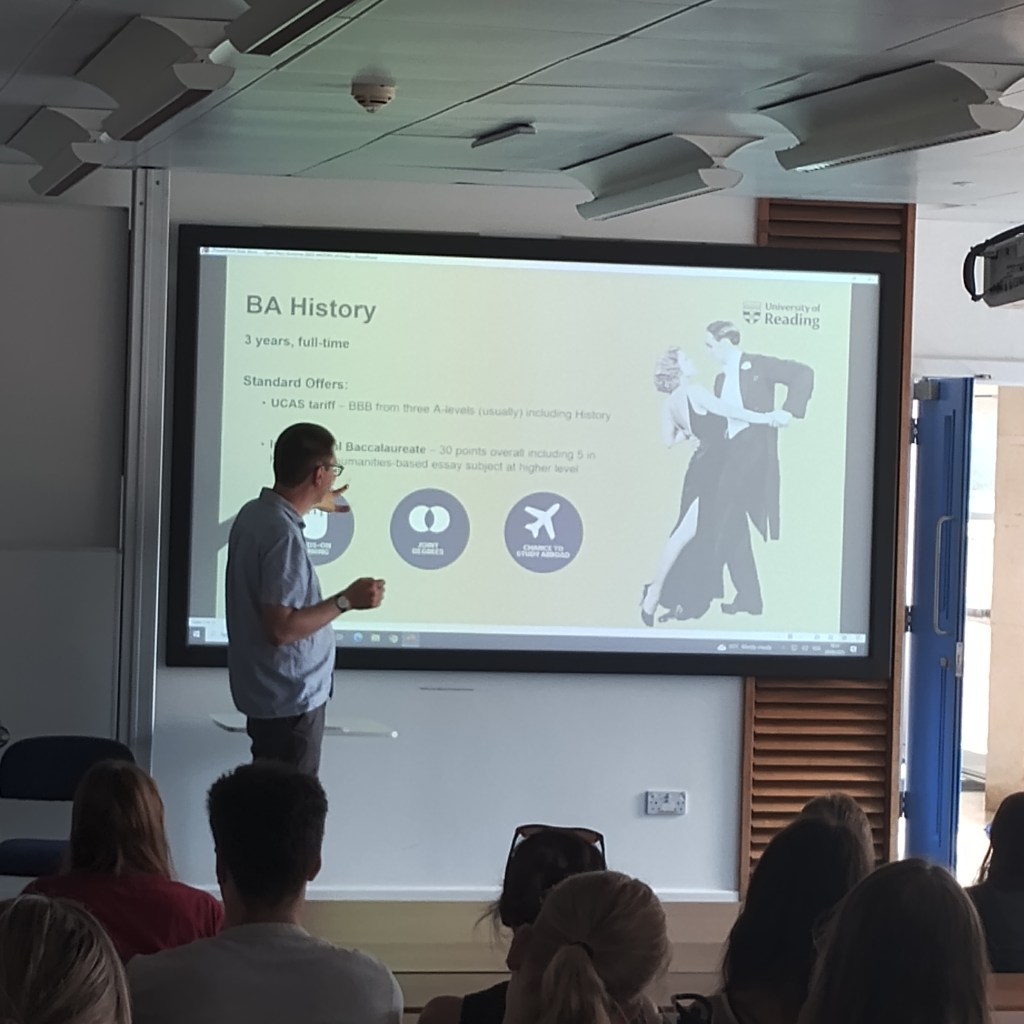
On July 16th, we hosted prospective applicants at our History Taster Day. Alongside the summer open days, this event was a great opportunity for those interested in history to come and sample what we have to offer. Dr Dan Renshaw delivered a session on Dracula, and PhD candidate Christos Giannatos presented some of his current research:
“I had the pleasure of delivering a lecture for the second year in a row at the History Taster event, hosted by the University of Reading speaking to an enthusiastic audience. I shared my experience as a PhD student in History, with a focus on Maritime History, and explored what postgraduate research in History can involve. The audience was engaged and curious, making it a thoroughly enjoyable and rewarding experience once again. It was a great opportunity to inspire the next generation of historians and reflect on my own academic journey.”


In the afternoon, Abbie Tibbott delivered a session that explained to students how she came to be doing a PhD, touching on some important things to consider when applying to university. She said of her session:
“During my slot, we talked about how I ended up at university, and how I used my time here to work on my skills in preparation for my future. As I’m coming to the end of my time here, it was great to pass on my advice to those coming next. Students were curious about the support on offer and what I liked most about on campus. As I’ve benefitted hugley from the supportive community here, that was my answer!”
Our events have been a great success, and we are grateful to all of our brilliant staff and PhD students who have put together interactive sessions for our visitors.

 READING HISTORY
You must be logged in to post a comment.