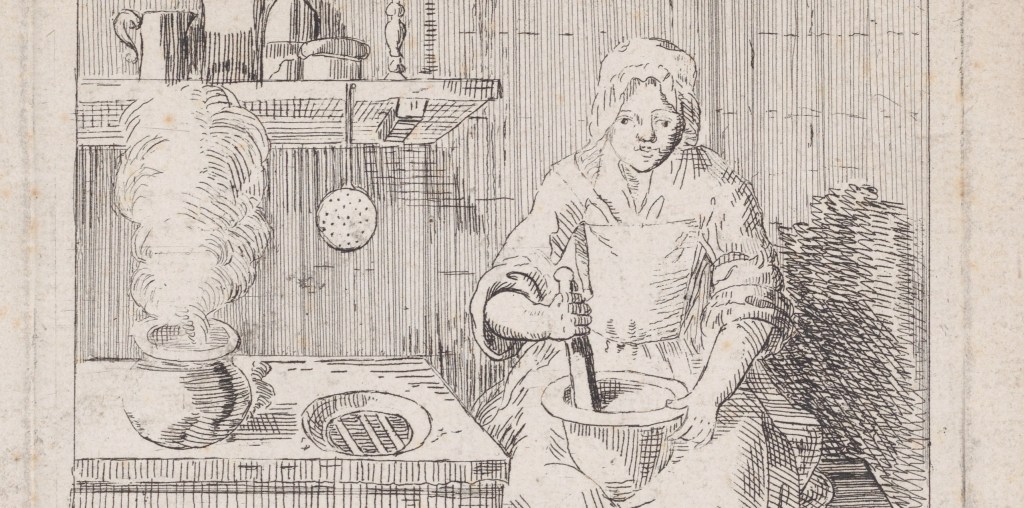
As part of their project working with the Royal Berkshire Archive (RBA) for the module HS2GPP: Going Public, Part 2 undergraduate students examined an 18th century cookbook. Today, Anna Puckey and Henry Merison share one of the seasonal recipes they found.
What is a Winter Cheese?
The Hunter Cookbook (D/EZ224/1) provides us with a fascinating insight into a range of recipes from the Georgian era, including an exciting recipe for cheese. Preservatives and modern technology like fridges are luxuries we often take for granted. In the 1700’s people had to rely on seasonal recipes and traditional cooking techniques so that they could consume certain foods all year round, as they did not have access to the modern food manufacturing processes we have today. Lady Stuart’s cheese is an interesting example of this.
The name ‘Winter Cheese’ refers not to when it was made, but instead to when it was supposed to be consumed. A winter cheese would usually be made in the summer to be stored and consumed in the colder months. The Hunter Cookbook contains a winter cheese recipe similar to other known methods from the Georgian era, but one that has seemingly been lost to time as food science and technology has advanced and changed. Despite this, we can still preserve these traditional recipes, such as those in the Hunter Cookbook, and recreate them today as a tribute to the history of food in our country, and particularly to Berkshire with this local version.
A brief history of cheese
Cheese has been a food present throughout history. Humans have been consuming it since as early as 6000 BC, when it was likely made accidentally as we began to domesticate sheep and transported their milk. There is also evidence that cheese was produced in Europe as early as 5500 BC in Poland. Even the Romans loved cheese, including Pliny the Elder, who mentioned one from the Auvergne region of France in his Historia Naturalis, suggesting the Romans enjoyed a diverse variety of cheeses from various regions. So, for up to 10,000 years we have been making and eating cheese. Methods and recipes for making it have evolved, but it is particularly in the last few hundred years that we have seen radical changes.
How does the recipe compare to other contemporary cheese making methods?
Eleanor Hunter got her winter cheese recipe from Lady Stuart, and wrote it in her recipe and commonplace book (D/EZ224/1). It follows methods that were commonplace for making such a cheese at the time. Lady Craven’s Recipe Book, from 1703, uses a method that combines the fresher milk with the ‘’cream of last night’s milk’’, as does the recipe in this cookbook. Additionally, they both call for the juice of marigold flowers, salting the cheese, and covering the cheese with cloth. Therefore, we can see that the Hunter recipe is one fit for its era.

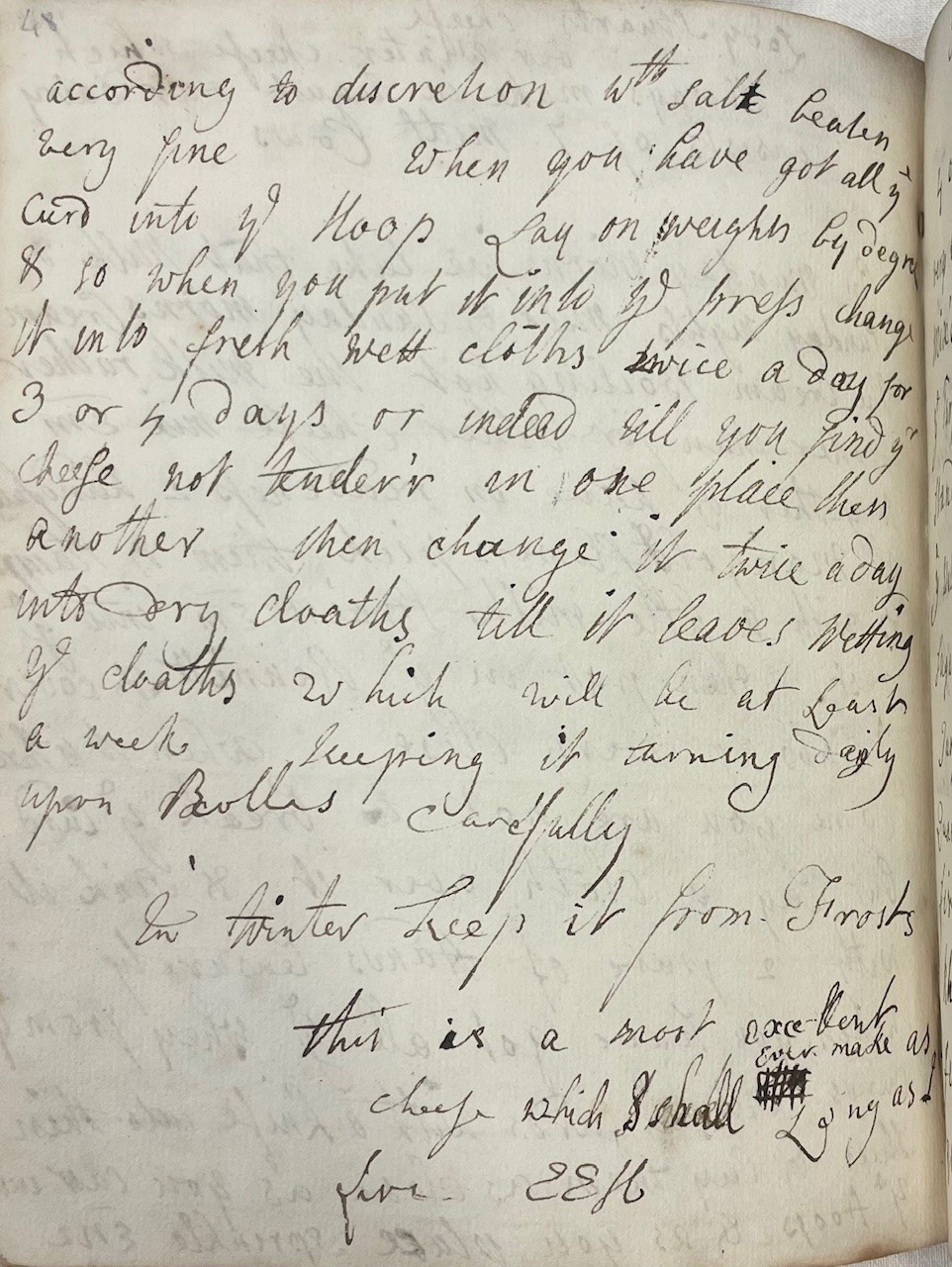
However, there is still some uniqueness to the Hunter’s book – mainly in the form of personal touches and notes on the recipe, with notes such as ‘we always make in August’ (Lady Craven’s recipe also call for the cheese to be made in the summer months). Other personal touches include the final sentence: ‘This is a most excellent cheese, which I shall ever make as long as I live. Love EEH.’ Who EEH is, is unclear, as several names in the Hunter family tree could match these initials (a mystery explored in our previous blog), though this final sentence is an indicator of the personal nature of the cookbook.
How does it compare to modern methods?
The methods for making cheese have changed considerably since the 18th century. Food-science and technology have had major advancements over the last few centuries that mean preparing a cheese months in advance is no longer necessary; although is still required to make certain cheeses.
Some modern cheese making methods seem similar to these past recipes. The best modern equivalents to Lady Stuart’s winter cheese are Clabber cheese and Brie, with the latter also using a mixture of milk, heavy cream, rennet and salt, among a few other ingredients in the modern Brie recipe. Berkshire also still has notable local recipes such as Barkham Blue cheese. The industrialisation of food making has allowed for the mass production of cheese, leading to more processed foods that can be made any time of year. This means we have lost many of these unique and local homemade recipes, in exchange for cheap and easy alternatives.
We have transcribed and adapted the Hunter recipe for you to try to make yourself over the Christmas period, or in the future – though bear in mind you’ll need to let it age for several months!
Lady Stuart’s Winter Cheese Recipe (transcribed and adapted for modern use):
Ingredients:
- 5l of whole milk
- 0.5l of heavy cream
- 7.5ml strained juice of marigold flowers (or substitute with 30ml of juice from strained oranges for a similar citrusy flavour profile)
- 19ml rennet
- 11g sea salt
Equipment:
- Wooden Spoon
- Saucepan
- Thermometer
- Cheese mould/hoop
- Cheese cloth
- Weight
Method (serves approx. 10 people):
- Mix 5l of milk with 0.5l of heavy cream in a saucepan using a wooden spoon
- Heat the mixture to 37°c, using a thermometer to measure the temperature
- Stir in 7.5ml of the strained juice from marigold petals (or alternatively 7.5ml of strained juice from oranges)
- Add 19ml of rennet, and stir until curds start to form
- Break up the curd using the wooden spoon, and transfer the mixture into either a cheese mould or a hoop lined with a cheese cloth
- Turn the cheese in the mould and salt it, repeating this process three times
- Press the cheese under a weight, leaving it for a day
- Bind the cheese in a cheese cloth and allow it to age for around four months (according to Eleanor Hunter’s recipe, the cheese will taste best this way!)
This blog was originally published on the RBA site, here. Read part one of the series here.

 READING HISTORY
You must be logged in to post a comment.