
With our centenary fast approaching, David Stack looks back on four historians who played a crucial role in the foundation and development of the University of Reading.
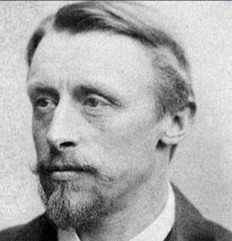
The One who got the ball rolling: Arthur Johnson (1845 -1927)
The Revd Arthur Johnson was, in the words of his Times obituary, ‘a great Oxford figure’. He nonetheless also deserves recognition at Reading for his pioneering contribution to the Oxford Extension movement, which led to the creation of University College Reading and, ultimately the University itself. Johnson gave the very first Oxford Extension lecture, entitled ‘The History of England in the Seventeenth Century’, in 1878. As a historian he ranged across English and European history, from the fall of the Roman Empire through to the Victorians and wrote in what has been described as ‘a heartily unacademic style’. An athletic man, Johnson was famed for his speed, and in 1874 was part of Oxford University’s FA Cup winning side.
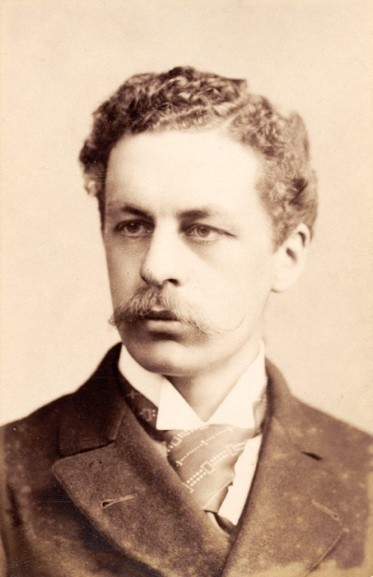
The One who got the train to Reading: Halford Mackinder (1861-1947)
Although best known as a geographer, and pioneer of geopolitics, Mackinder’s first degree in 1883 was in Biology. A year later he had a second degree, this time in History, a subject he had turned to with the then fashionable ambition of exploring ‘how the theory of evolution would appear in human development’. It was from this, scientifically informed, historical perspective that his work in geography developed and he often delivered history lectures for the Oxford Extension movement. Reading was his favoured location because of the ease of the railway commute. Mackinder’s push for the creation of the College at Reading in 1892 was prompted by a change to local government finance that meant that County Councils could fund technical institutions, but not arts and humanities subject. By bringing together the town’s established Schools of Art and Science with his Extension lectures Mackinder hoped to leverage funds to cross-subsidise the teaching of literature and history. He also, in 1893, made the astute appointment of perhaps the most important historian in the University’s story, William Childs.
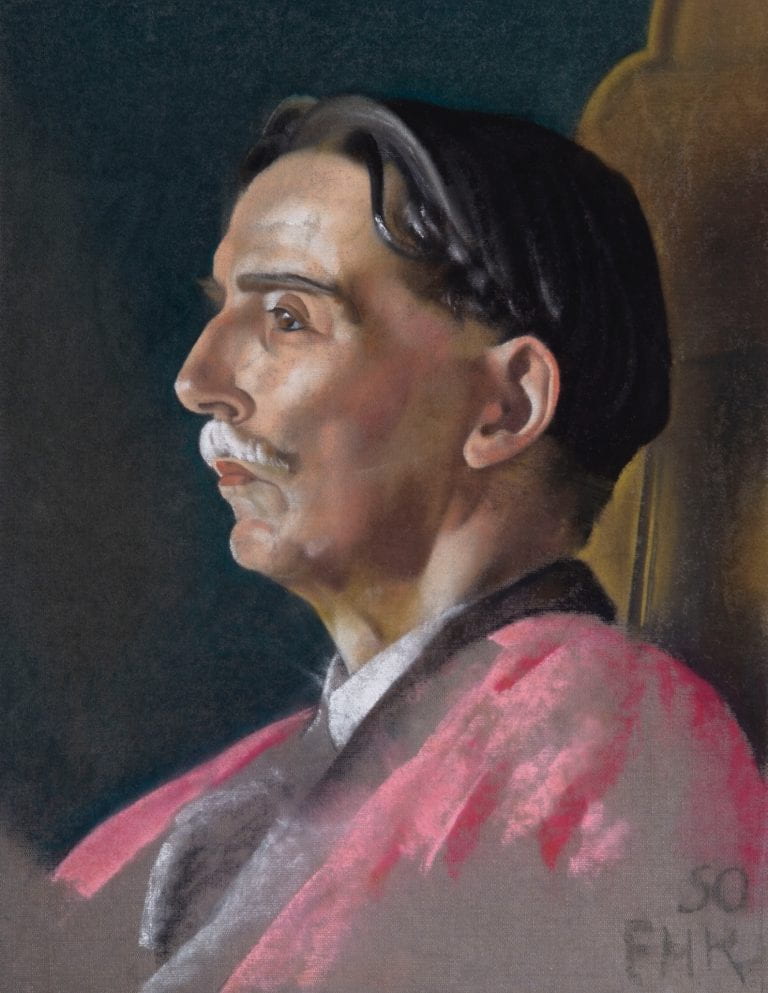
The One who secured the Charter: William MacBride Childs (1869-1939)
A grammar schoolboy from Portsmouth, Childs studied history at Oxford and throughout his life carried with him a sense of disappointment at being awarded a second-class degree when he graduated in 1891. Two years later, however, he was appointed as a lecturer at Reading and soon displayed the drive and ambition which led, eventually, to his securing of the Royal Charter for Reading in 1926. Our first Vice-Chancellor, Childs could be a difficult man – he was uneasy with small talk and occasionally dictatorial in style – but without him Reading would not have become a university in the inter-war period. Childs’s administrative roles robbed him of much of the time he might have spent writing history, but he was able to produce two works chronicling the early years of the University; two devoted to the history of the town of Reading; and one paean to his love of camping expeditions, the wonderfully titled Holidays in Tents (1921).
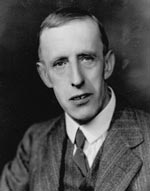
The One who brought us to Whiteknights: Frank Merry Stenton (1880-1967)
Stenton, like Childs, studied history at Keble College, Oxford, but whereas Childs’s potential was lost in practical tasks, Stenton flourished as a historian of distinction before taking on the role of Vice-Chancellor (1946-50) towards the end of his career. Stenton’s work, especially his Anglo-Saxon England (1943), was outstanding and definitional in his field. His enduring contribution to the rest of the University was overseeing the purchase of Whiteknights Park, without which Reading would have struggled to take advantage of the expansion of higher education later in the twentieth century. When work began on the first new building on the new campus – the Faculty of Letters (now the Edith Morley Building, opened 1957) – Stenton was invited to cut the first turf, which he did with self-deprecating humour: ‘Unaccustomed as I am to public digging, as indeed to every other form of physical exercise …’.
Johnson, one suspects, would have attacked the task with more gusto, but not all historians are the same.

 READING HISTORY
You must be logged in to post a comment.