ReadingHistory
-
#BLM Voices of the Dream Ancestors: from National Hero to the Aboriginal Rights Movement by Tamisan Latherow
CONTENT WARNING: This post may contain voices, images or names of people who have died. *Note, throughout this article we use the terms Aboriginal and Torres Strait Islander. This term was chosen specifically due to the naming conventions of the… Continue reading
-
#BLM ‘a good breedin’ ‘oman sho did fetch de money,’ by Aisha Djelid
On the 10th January 1859 a court in Charleston, South Carolina, advertised the sale of Betty, a twenty-five-year-old enslaved woman. Betty was a ‘breeding woman,’ meaning that slaveholders valued Betty for being young, strong, healthy and, crucially, fertile. Advertised as a… Continue reading
-
#BHM ‘Beyond the Reggae Bassline’ by Professor Matt Worley
For Bunny ‘Striker’ Lee, whose death was announced as I wrote this blog (1941–2020) I first heard Reggae as a child, the rhythms sending me to sleep as a I lay on a camp-bed in Nottingham. My Grandma lived on… Continue reading

-
#BLM Finding ‘sanctuary’ with the US Army, by Liz Barnes
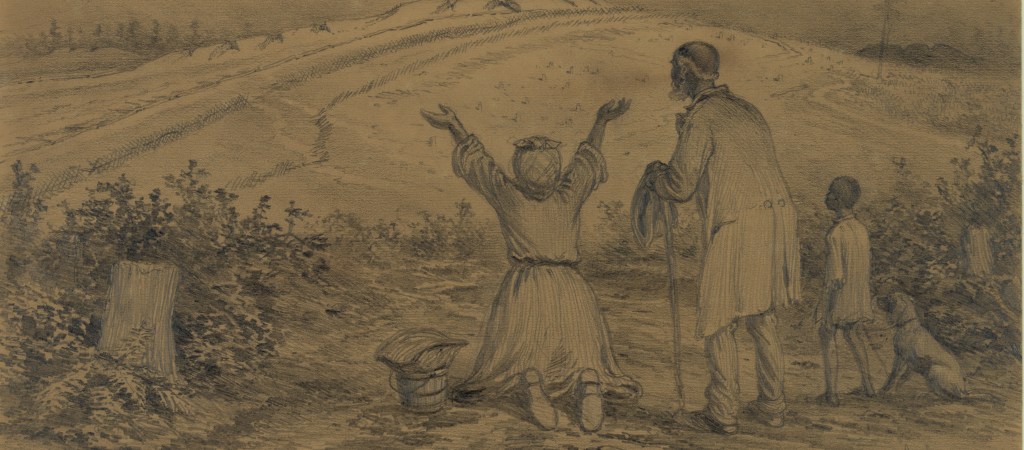
During the American Civil War (1861-1865), hundreds of thousands of enslaved men, women, and children fled farms and plantations across the South to secure their freedom. Frequently, this flight was towards the camps of soldiers fighting for the US Army,… Continue reading
-
#BHM ‘The different meaning of HMT Empire Windrush’ by Dr Daniel Renshaw
On a rainy June morning in the summer of 1948 a British troopship, itself requisitioned from the German navy during the Second World War, arrived at Tilbury docks in Essex, carrying a number of Polish ex-soldiers, some Jamaican pilots who… Continue reading

 READING HISTORY